

4 Common Culprits of Water Damage
What Causes Water Damage? Find Your Source & Next Steps
Water damage usually occurs for two reasons: an indoor leak or water entering from outside of your home. No matter the source of your water damage, this guide can help you identify it and fix your water damage problem. By the end, you should be able to recognize the warning signs of water damage and choose a safe next step.
If you contact Revive for water damage help, our team can assess the source and damage, as well as explain the scope of drying or repair work your property may need.
Start with the basics:
- Make the area safe before you investigate.
- Narrow down the source by checking common indoor and outdoor water entry points.
- Know when to call for professional help when water is unsafe, ongoing, or difficult to trace.
Start by Making the Area Safe
Before you begin investigating, ensure that you are safe from electrical danger or sewage hazards. Following the checklist below should help you cover your bases:
- Stay out of standing water near electrical outlets, equipment, or appliances.
- Treat any sewage or water from an unknown source as contaminated. Don’t handle it without proper protection.
- If water is coming from an active appliance or an accessible fixture, stop using it. Turn off the fixture only if you can do so without standing in water or reaching through water.
- Don’t unplug appliances, handle appliance connections, enter standing water, or attempt plumbing or electrical repairs.
- Secure the area, keep people and pets away, and move valuables or photograph visible damage only when it is safe.
- Contact our team if you feel the water is extensive, hidden, contaminated, continues entering the home, or cannot be stopped.
 Is the Water Coming From Inside Your Home?
Indoor water damage usually begins around plumbing, appliances, or systems that move water through your house. Pooling, drips, stains below bathrooms, damp cabinets, and a sudden rise in the water bill can help to narrow down your source of water.
| Possible source | What you may notice | Safe first check |
|---|---|---|
| Pipes, fixtures, or drains | Drips, pooling, damp cabinets, slow drains, or toilet backups | Look under sinks and around toilets for visible moisture without touching plumbing. |
| Appliances or water heaters | Water near a washer, refrigerator, dishwasher, or water heater | From a dry area, look for pooling or damp flooring around the appliance. Do not handle hoses or connections. |
| HVAC system | Water near the indoor unit, ceiling stains, or a musty smell near vents | From a dry area, visually check around the unit and nearby surfaces. Do not touch the unit, drain, or ductwork. |
| Sewer backup | Slow drains, foul odors, toilet backups, or contaminated water | Keep clear of the water and follow the safety steps above. |
Check Pipes, Fixtures, and Drains
Pipes can leak or burst for several reasons, and tend to be one of the most common causes of water damage coming from inside the house. In colder weather, water inside pipes is at risk of freezing and expanding, which can crack a pipe and cause a leak when the water melts. Blocked drains or toilets can also put pressure on pipes and lead to cracks or leaks.
Start by looking for drips, pooling, damp cabinets, stains, slow drains, or toilet backups in easily accessible spaces. Slow leaks near toilets, supply lines, and drains can go unnoticed until signs of water appear.
For an active leak, or any leak, stain, or damp area you cannot confidently trace, secure the area and reach out to a professional for additional help. It’s rarely a good idea to wait for the leak to worsen, or try to repair the plumbing yourself if you don’t fully know the source.
Check Appliances and Water Heaters
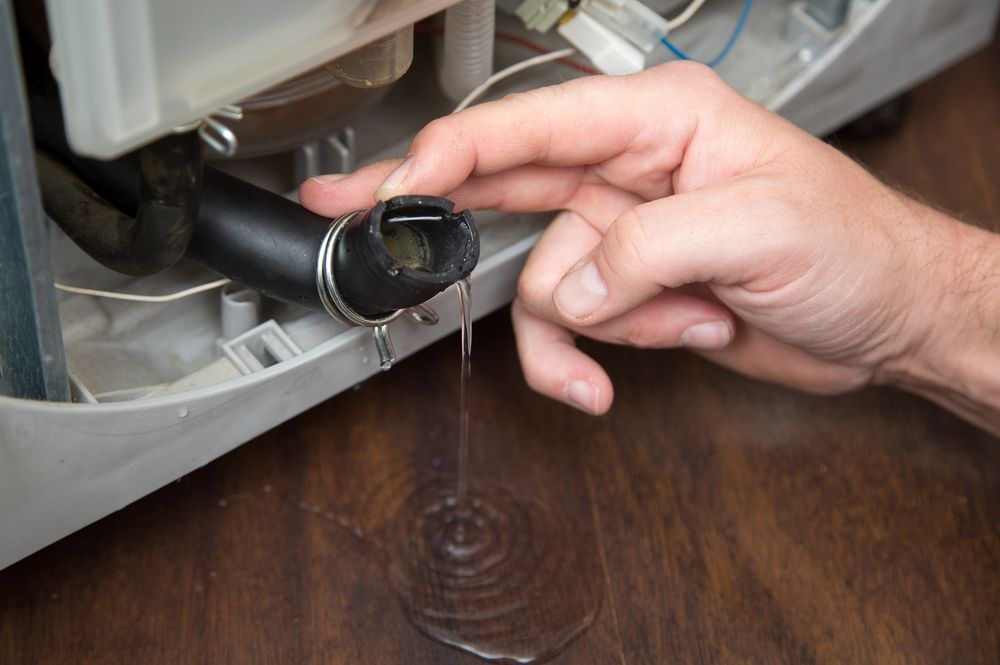
Washing machines, refrigerators, dishwashers, and water heaters can also be common sources of a leak as parts age or hoses fail. Just because your appliance is in working condition doesn’t mean it’s immune to leaks. Be sure to check for pooling, damp flooring, or visible moisture around the appliance.
Use visual checks only. Do not touch, disconnect, tighten, or repair hoses, water lines, or electrical connections. Stop using the appliance or water heater if you find active leaking, pooling water, or moisture around it.
Check Your HVAC System
An HVAC system can create water problems if a condensate drain clogs, a drain pan overflows, or condensation forms around ductwork.
Water near the indoor unit, ceiling stains, or a musty smell near vents can signal a problem. From a dry area, visually check for water around the unit and nearby surfaces. Do not touch the unit, drain, drain pan, or ductwork.
Treat Sewer Backups as Contaminated Water
Slow drains, foul odors, and toilet backups can point to a sewer problem. Treat sewage-contaminated water as hazardous, and don’t handle it without proper protection.
Keep people and pets away from the area, secure the space, and return to the safety checklist above.
Is Water Entering From Outside?
Outside water can enter when the roof, exterior openings, drainage, or foundation does not direct water away from the home. Note when the problem appears: rain, snowmelt, storms, or water pooling near exterior walls can indicate the entry point.
| Possible entry point | What you may notice | Safe first check |
|---|---|---|
| Roof or flashing | Ceiling stains, attic dampness, or leaks near vents, chimneys, or skylights | From inside, check ceilings and accessible attic areas for signs of moisture. |
| Gutters and downspouts | Overflowing gutters or water collecting near the foundation | From the ground, check whether downspouts send runoff away from the foundation. |
| Windows and doors | Damp trim, peeling paint, or leaks during wind-driven rain | Visually inspect accessible trim, seals, and caulk. |
| Foundation, basement, or sump pump | Damp walls, floor seepage, musty odors, or stormwater pooling | Check for visible water in the basement and around exterior walls. |
Look for Roof Leaks and Damaged Flashing
Roof materials can deteriorate with age, temperature changes, and harsh weather. Water may also enter through damaged flashing (flashing is the material that seals roof joints and openings around vents, chimneys, and skylights).
Keep an eye out for ceiling stains, attic dampness, and leaks near these openings. Don’t climb onto a roof or inspect a damaged roof in unsafe conditions however. A qualified roofing professional can assess a suspected exterior roof source and will be the safest route if you suspect your roof needs inspection.
Check Gutters and Downspouts
Leaves and branches can clog gutters, causing them to overflow. Water can then run down the side of the home and collect near the foundation, where it may seep inside.
From the ground, check for gutter overflow and whether each downspout sends runoff away from the foundation. Clear debris only when you can do so safely.
Look for Leaks Around Windows and Doors
Damp trim, peeling paint, and leaks during wind-driven rain can signal water entering around windows or doors. Damaged seals, caulk, or exterior trim can create openings for water.
Limit your first check to a safe visual inspection of accessible areas. If water enters, secure the area and see if it returns. If water returns, paint continues peeling, or you can’t identify the entry point this could mean it’s time for window and door repairs to prevent future leaking.
Check the Foundation, Basement, and Sump Pump
Storms and heavy rainfall can cause water to build up along the foundation and enter the basement. Foundation cracks, poor drainage, and a sump-pump failure can all contribute to water damage.
Keep an eye out for damp basement walls, floor seepage, musty odors, stormwater pooling, or a sump pump that does not appear to be working. If water enters the basement, the source is unclear, or the sump pump fails, this is another sign you may need professional help.
How to Help Prevent Future Water Damage
Running semi-regular checks for leaks can help you catch problems early, but they don’t always prevent every water problem from occurring. However, there’s still value to regular inspections and maintenance.
For homeowners:
- Check visible hoses, plumbing, and appliances for moisture or wear.
- Clean gutters and confirm downspouts send runoff away from the foundation.
- Test the sump pump and maintain HVAC drains.
- Find more ways to protect your home or business from water damage.
For property managers:
- Include visible hose, plumbing, appliance, gutter, downspout, sump-pump, and HVAC-drain checks in routine property walks.
- Secure affected spaces when water is active, recurring, hidden, or contaminated.
- Record the location, timing, and visible scope of leaks, stains, odors, and drainage problems.
- Keep residents, owners, and other stakeholders updated on the condition of the space and the next steps.
If water is actively entering the property, hidden or extensive damage is suspected, or water is contaminated, contact Revive for water damage and sewage backup help. Tell our team where you found the water, whether it is still entering, and which areas are affected. We can inspect the affected areas and explain the drying or repair work needed next.

Newsletter Coming Soon!
Receive regular updates on tips and tricks to keep your house or office building in tip-top shape.